

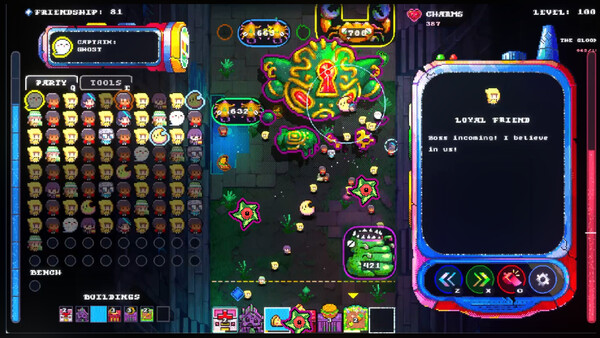
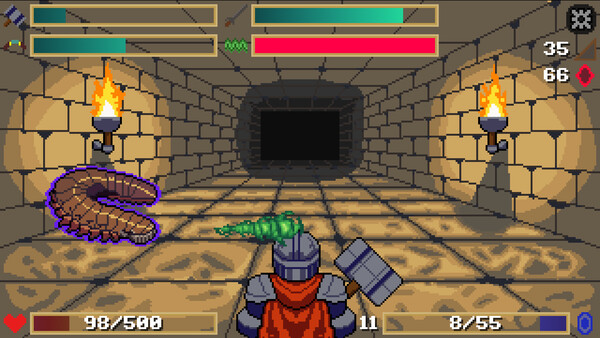
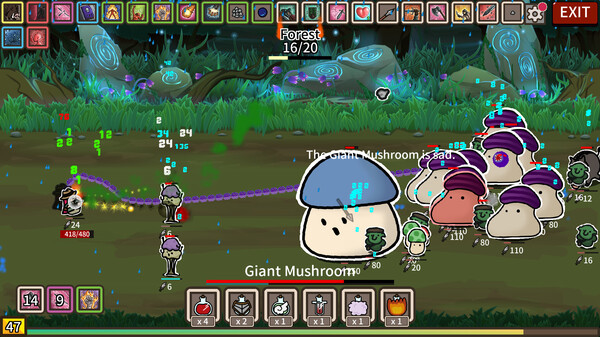
A yellow light races around the border of your inventory, status effects and numbers explode around your character’s portrait like fireworks, and your artfully arranged equipment deploys one flashy attack after another. Dungeonbound is undeniably a sensorial delight, but is its beauty only skin deep?
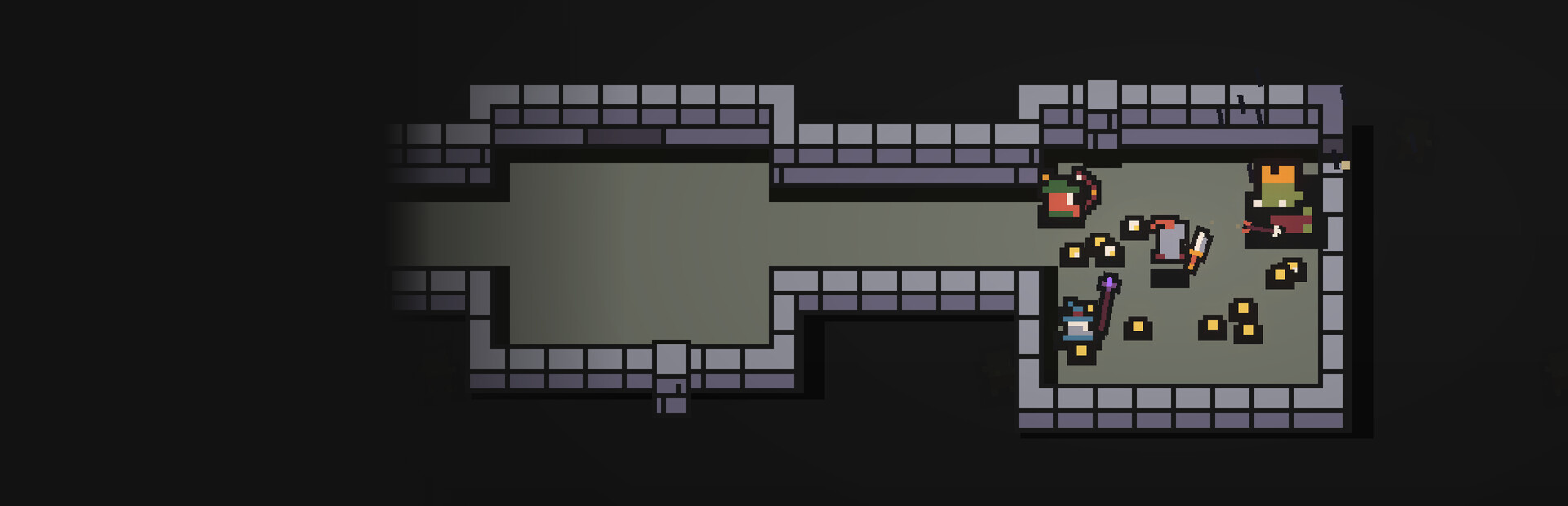
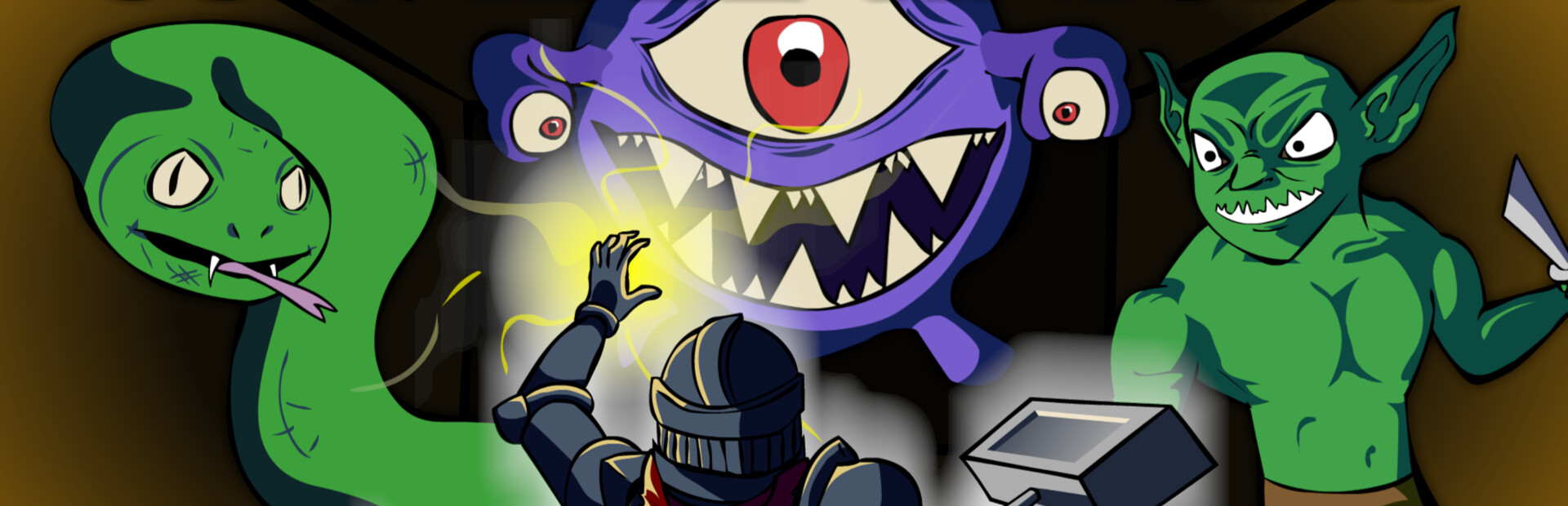
Truthfully, presentation goes a long way in autobattlers and incremental games. When interactivity takes a backseat, it’s nice to have something pretty to look at. From the moment your character takes their first steps into those gorgeously realized grimdark environments, it’s clear that Dungeonbound owes as much to the flashing neon lights of casinos as to big-box dungeon crawlers played on chunky CRT monitors. While some assets may look familiar to anyone who chews through indie dungeon crawlers, they’re well contextualized here, and it’s hard to begrudge the developer for choosing what we’ll call the lesser of two evils (if you know, you know).
Developer louidev has created a sturdy framework of interlocking systems, which they’ve wisely recognized can support both roguelike and incremental modes. If you’re familiar with either genre (and if you’re reading this, it’s safe to assume that you are), each mode does pretty much what it says on the tin. Roguelike mode has the expected trappings: power-ups on new floors, shops, blacksmiths, and, of course, the creeping inevitability of death and the opportunity to do it all over again. Incremental mode works similarly, highlighting the sometimes thin line between the two genres, though your early runs will be shorter, giving you just enough coin to get, well, incrementally stronger for your next attempt.
Across both modes, there are plenty of ways to scratch your itch for loot. Most of it comes from enemies, who drop equipment (color-coded for your pleasure) that you can fuse, bless, curse, or even socket. Dungeonbound offers a sumptuous feast of build-crafting systems that somehow never feels bloated.
The harmonious interplay between its many genres is Dungeonbound’s greatest strength. Louidev has recognized that autobattlers, incremental games, roguelikes, and inventory managers ultimately scratch the same itch. At their best, they’re easy to pick up and play and highly rewarding, especially for those who don’t have time to sink 100 hours into the latest world-changing AAA soulslike.
While it’s undeniably an amalgamation of several currently trending genres, Dungeonbound has a few surprises of its own. Alongside the usual enemies, you’ll encounter other players’ builds during dungeon crawls, giving you a chance to see how yours stacks up. PvP is nothing new in isolation, but it’s a genuinely cool addition to a hodgepodge of genres where you wouldn’t expect it. If that doesn’t satisfy your competitive spirit, a variety of leaderboards let you showcase your inventory-management skills.
Despite its many strengths, Dungeonbound has a few rough edges. The sound design is hardly a highlight, though given how long you’re bound to spend wandering through its many dungeons, unobtrusive may be the move. Some may find that, for all its systems and flashy effects, Dungeonbound is much wider than it is deep. But I suspect that, after a long day, many more players will be happy to treat themselves to dungeon-crawling comfort food, sit back, and enjoy the fireworks.












Comments.